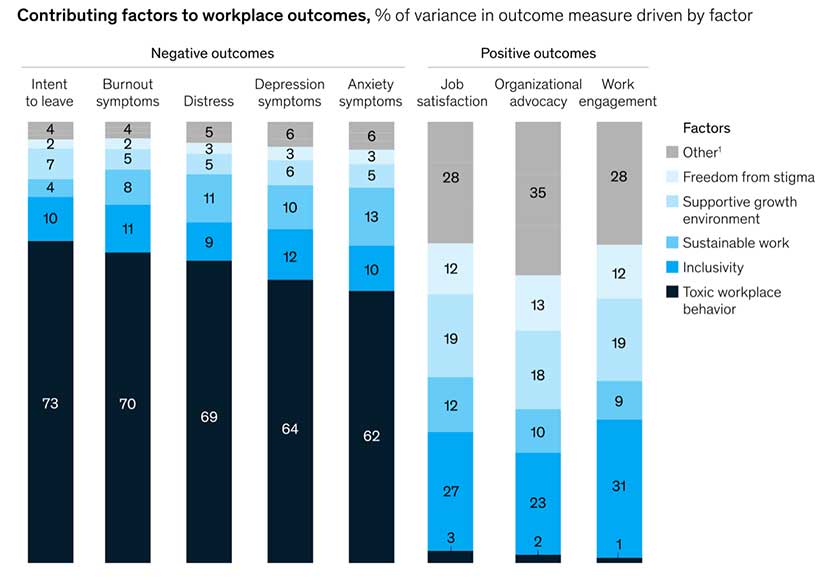

Excerpt  January 2022
https://sloanreview.mit.edu/article/toxic-culture-is-driving-the-great-resignation/
Excerpt March 2022
https://sloanreview.mit.edu/article/why-every-leader-needs-to-worry-about-toxic-culture/
Excerpt  November 2015
https://www.hbs.edu/faculty/Publication%20Files/16-057_d45c0b4f-fa19-49de-8f1b-4b12fe054fea.pdf
ABSTRACT
“While there has been a strong focus in past research on discovering and developing top performers in the workplace, less attention has paid to the question of how to manage the workers on the opposite side of the spectrum: Those who are harmful to organizational performance. In extreme cases, aside from hurting performance, such workers can generate enormous regulatory and legal and liabilities for the firm.
We explore a large novel dataset of over 50,000 workers across 11 different firms to document a variety of aspects of workers' characteristics and circumstances that lead them to engage in what we call “toxic” behavior.
We also explore the relationship between toxicity and productivity, and the ripple effect that a toxic worker has on her peers.
Finally, we find that avoiding a toxic worker (or converting him to an average worker) enhances performance to a much greater extent than replacing an average worker with a superstar worker.”
Excerpt  May - June 2020
https://hbr.org/2020/05/why-sexual-harassment-programs-backfire
Neither the training programs that most companies put all workers through nor the grievance procedures that they have implemented are helping to solve the problem of sexual harassment in the workplace. In fact, both tend to increase worker disaffection and turnover.
Research shows that harassment training makes men more likely to blame the victims.
Bystander-intervention training is the most promising alternative we’ve come across. Sharyn Potter and her team at the University of New Hampshire’s Prevention Innovation Research Center have long conducted interesting experiments with it on college campuses and military bases, where harassment and assault are rampant. A dozen years ago they piloted a college bystander-intervention program that has since been used on more than 300 campuses. In 2011 it was adapted for the U.S.
The figure — and the numbers — tell a clear story. From 2009 to 2019, the average monthly quit rate increased by 0.10 percentage points each year.
Excerpt March 2022
https://hbr.org/2022/03/the-great-resignation-didnt-start-with-the-pandemic
The numbers are sobering.
In 2021, according to the U.S. Bureau of Labor Statistics, over 47 million Americans
voluntarily quit their jobs — an unprecedented mass exit from the workforce, spurred on
by Covid-19, that is now widely being called the Great Resignation. Worker shortages are
apparent everywhere: Gas stations and dentists offices alike have reduced their hours of
operation because they can’t find new employees to replace those who have quit. The
Great Resignation, we’re told, has upended the relationship between workers and the
labor market.
But such talk is overblown. A record number of workers did quit their jobs in 2021, it’s
true. However, if you consider that number in the context of total employment during the
past dozen years, as illustrated in Figure 1, you can see that what we are living
through is not just short-term turbulence provoked by the pandemic but rather the
continuation of a long-term trend.
Data on total employment from 2009 through 2019 reveals that the Great Resignation is not a pandemic- diven anomaly.
Share of workers voluntarily leaving jobs
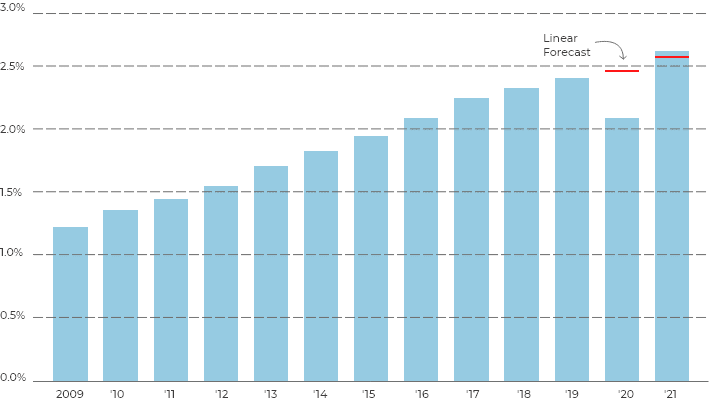
The figure — and the numbers — tell a clear story. From 2009 to 2019, the average monthly quit rate increased by 0.10 percentage points each year.
Excerpt  May 2022
The Great Resignation is set to continue, according to a new global survey by PwC, with
one in five saying they are likely to switch jobs in the next 12 months.
PwC launched its “Global Workforce Hopes and Fears Survey 2022” at the World Economic
Forum in Davos on Tuesday, which surveyed more than 52,000 workers in 44 countries.
Excerpt 
https://workplacebullying.org/wp-content/uploads/2021/04/2021-Full-Report.pdf
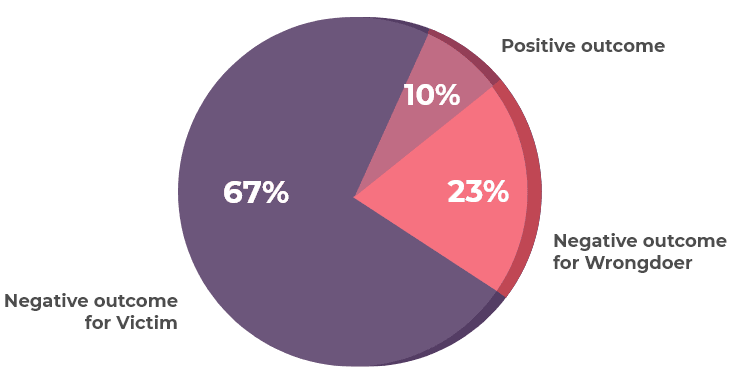
| Proportion | Percentage | |
|---|---|---|
| Target voluntarily left the job to escape more mistrearmwent | 2346 | 23% |
| Target was forced to quit when work conditions were deliberately made interable | 1732 | 17% |
| Employer terminated the target | 1181 | 12% |
| Target transferred to different job or location with same employer | 1496 | 15% |
| Negative outcome for target | 6755 | 67% |
| Perpetrator was punished but kept job | 1055 | 11% |
| Perpetrator was terminated | 0897 | 9% |
| Perpetrator voluntarily quit | 0346 | 3% |
| Negative outcome for perpetrator | 2298 | 23% |
| Positive actions by employer stopped it | 0582 | 6% |
| Positive actions target's coworkers stopped it | 0362 | 4% |
| It did not stop | 1229 | 12% |
Excerpt 
https://fortune.com/2022/01/25/why-managers-are-quitting-during-the-great-resignation/
Excerpt 
https://pmq.shrm.org/wp-content/uploads/2020/07/SHRM-Culture-Report_2019-1.pdf
Excerpt  May 27, 2022